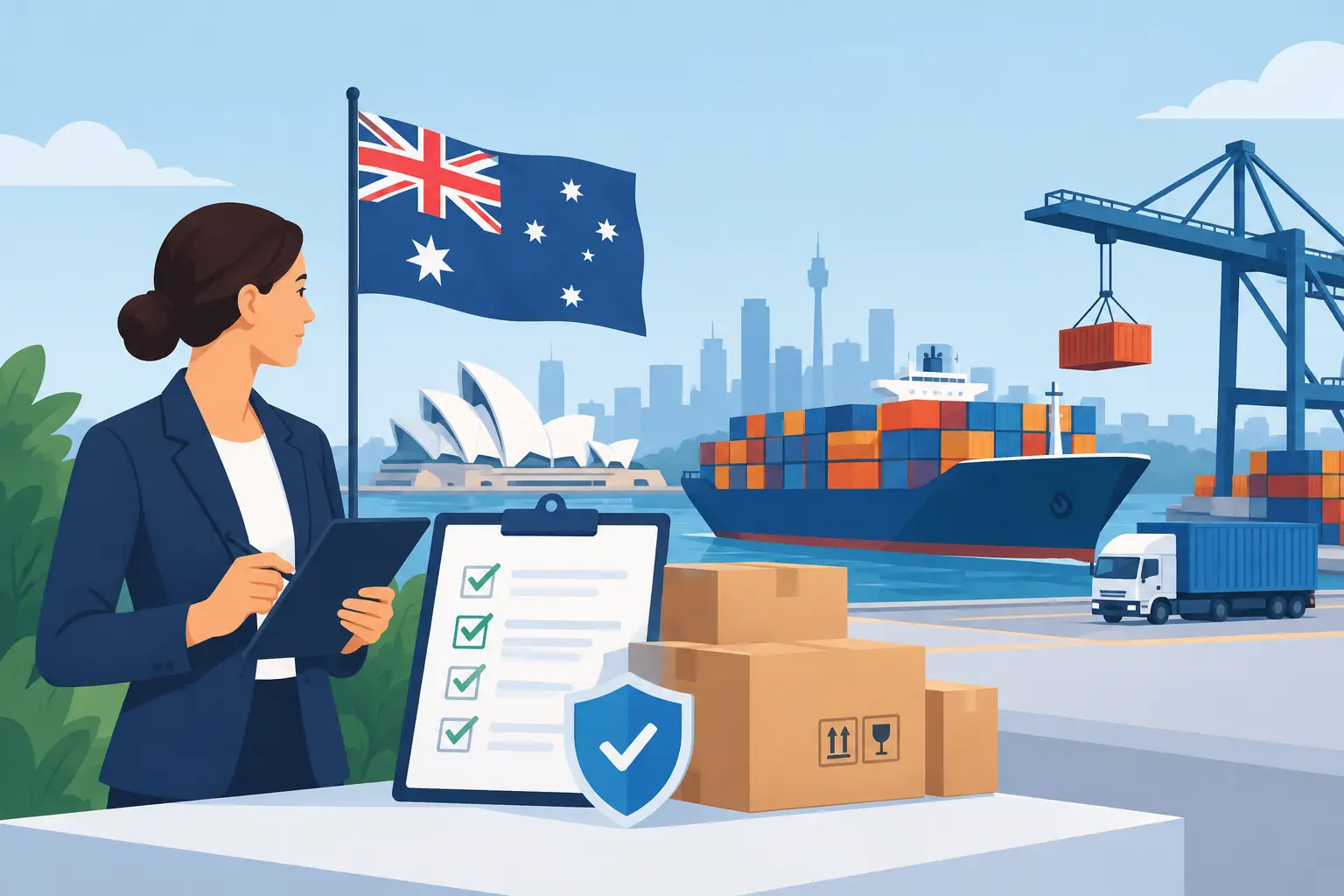
A founder signs a supplier deal in a hurry, agrees to a handshake arrangement with a developer, or starts selling into Hong Kong before checking how the contract will work across borders. None of these choices feels dramatic at the time. Yet this is often where legal support for founders proves its value – not as a last-minute fix, but as a way to keep momentum without creating avoidable risk.
Founders rarely need more paperwork for its own sake. They need clear advice that helps them make decisions, allocate risk sensibly, and keep the business moving. That matters even more when the business has ties to Australia, Hong Kong or Mainland China, where legal systems, language and commercial expectations do not always line up neatly.
What legal support for founders should actually do
At an early stage, legal work is often misunderstood as a compliance exercise. In practice, good legal support should help founders answer commercial questions with confidence. Can we sign this deal as drafted? Is this payment structure exposing us unnecessarily? Who owns the IP if a contractor built the product? What happens if a distributor in another market underperforms? Are we setting up a structure that still makes sense in twelve months?
That is why the right legal adviser is not simply producing documents. They are helping founders weigh options, identify where a shortcut is acceptable, and recognise where it is not. Sometimes the best advice is to keep things light and move quickly. Sometimes speed creates a problem that later costs far more to correct. The value sits in knowing the difference.
For founders, the challenge is usually not whether legal advice is useful. It is when to get it, how much of it is needed, and whether it can be delivered in a way that is commercially realistic.
The legal issues founders tend to leave too late
Most startups and growing businesses can operate for a while with imperfect legal foundations. That is precisely why some issues get delayed. The trouble is that the legal gap often appears only when there is money, friction, or expansion involved.
Founders commonly postpone clarifying equity arrangements, vesting, decision-making rights and exit expectations. This can seem manageable when everyone is aligned. It becomes harder when a co-founder leaves, a new investor asks questions, or the business starts generating real value.
Customer and supplier contracts are another area where founders often accept terms without enough scrutiny. A contract may include broad indemnities, automatic renewals, restrictions on liability that work only one way, or dispute clauses tied to a foreign jurisdiction. None of this is unusual. But it can materially change the risk profile of a deal.
Intellectual property is frequently mishandled as well. If branding, code, content or product design is created by a contractor without proper assignment terms, ownership may not sit where the founder assumes it does. That issue tends to surface during investment, acquisition or dispute, which is the worst time to discover it.
Then there is cross-border expansion. Selling into Hong Kong or working with counterparties connected to Mainland China can create legal and practical questions around governing law, enforcement, language, payment risk, data handling and local commercial practice. The legal point is not just whether a contract is valid. It is whether it is workable.
Stage matters more than founders think
Legal support should not look the same at every point in the business cycle. A pre-revenue founder does not need the same structure as a company hiring across markets or negotiating strategic partnerships.
In the earliest phase, the focus is usually on entity setup, founder arrangements, key contracts and IP protection. The aim is to avoid preventable mistakes without overbuilding a legal framework the business may outgrow quickly.
Once the business starts trading and hiring, the legal needs become broader. Employment arrangements, contractor terms, privacy obligations, customer terms, supplier contracts and internal approvals start to matter more. At this point, legal support becomes less about one-off documents and more about consistency in decision-making.
As the company scales, especially across jurisdictions, legal support needs to become more strategic. Expansion into new markets, investor negotiations, joint ventures, distribution deals and disputes all require advice that considers both immediate execution and longer-term position. A founder may still not need a full-time in-house lawyer, but they often do need regular, commercially grounded legal input.
Fractional or project-based legal support?
This is one of the most useful distinctions for founders. Not every business needs ongoing legal support, but many need more than ad hoc document review.
Project-based legal services suit discrete matters: a funding round, a shareholder agreement, a commercial dispute, a distribution agreement, an acquisition, or a specific regulatory question. This model works well when the issue is defined and time-bound.
Ongoing support, often delivered through a fractional general counsel model, is better suited to businesses making regular decisions with legal consequences. This includes reviewing contracts as they arise, advising on risk allocation, coordinating external specialists where needed, and helping management stay ahead of issues rather than reacting to them.
For founders, the trade-off usually comes down to cost structure and decision volume. Project-based work can be efficient when legal needs are occasional. But if the business is signing contracts regularly, operating across borders, hiring quickly, or managing several moving parts at once, waiting for each legal issue to become a separate project often creates friction. In those cases, ongoing support can be more practical and more cost-effective over time.
Cross-border legal support is not just about law
Founders working between Australia, Hong Kong and Mainland China face a layer of complexity that is easy to underestimate. The challenge is not only that legal systems differ. Commercial expectations, communication styles and approaches to negotiation can differ as well.
A term that seems straightforward in one market may be interpreted differently in another. A direct refusal may be handled differently across business cultures. A bilingual contract may contain subtle differences in meaning that become significant in a dispute. Even where the legal drafting is technically sound, the commercial outcome can still go wrong if the surrounding context is misunderstood.
This is where cross-border legal support becomes especially valuable. Founders need advice that reflects not only the black-letter law, but also how transactions are actually discussed, negotiated and performed in the relevant markets. Clarity matters. So does cultural fluency.
For a founder entering Hong Kong, dealing with a Mainland manufacturer, or structuring a business relationship that touches multiple jurisdictions, legal support should reduce complexity rather than add to it. That means advice in plain language, practical drafting, and a realistic view of enforceability, timing and commercial leverage.
How founders can get better value from legal advice
The best legal support for founders is rarely about asking for more documents. It is about asking better questions earlier.
A founder who brings in legal advice before signing a major deal usually has more room to negotiate than one who asks for help after the terms are agreed in principle. The same applies to co-founder arrangements, IP ownership and market entry planning. Early advice often costs less because the options are still open.
It also helps to be clear about the commercial objective. Lawyers can assess legal risk more effectively when they understand what matters most – speed, exclusivity, cash flow, investor readiness, reputation, or preserving optionality. Not every issue requires the most conservative position. But the risk should be chosen, not inherited by accident.
Founders should also look for advisers who can work at the right altitude. Some issues need detailed technical analysis. Others need a short, direct answer and a recommendation. Good legal support adjusts to that reality.
For businesses with recurring legal decisions, consistency matters too. When the same adviser understands the business model, growth plans and cross-border footprint, advice becomes faster, more practical and easier to apply. That is one reason many growing businesses find value in a flexible ongoing model such as the approach offered by SimplifyLaw.
Legal support should make decision-making easier
Founders are already managing uncertainty across product, people, capital and market conditions. Legal support should not add unnecessary weight to that. Its job is to give structure to decisions, protect the business where it counts, and help founders act with a clearer view of risk.
That does not mean every issue can be solved with a standard template or a quick answer. Sometimes the right approach depends on growth stage, bargaining power, regulatory exposure, or where the other party is based. But that is exactly why practical, commercially minded legal advice matters.
A founder does not need legal input on everything. They do need it at the points where a wrong assumption can slow growth, damage value, or create a problem across borders that becomes expensive to unwind later. Getting that support at the right time can be the difference between dealing with complexity calmly and being forced to clean up avoidable mistakes when the stakes are higher.
The most useful legal support is the kind that helps you keep moving, with fewer surprises and better decisions behind each step.