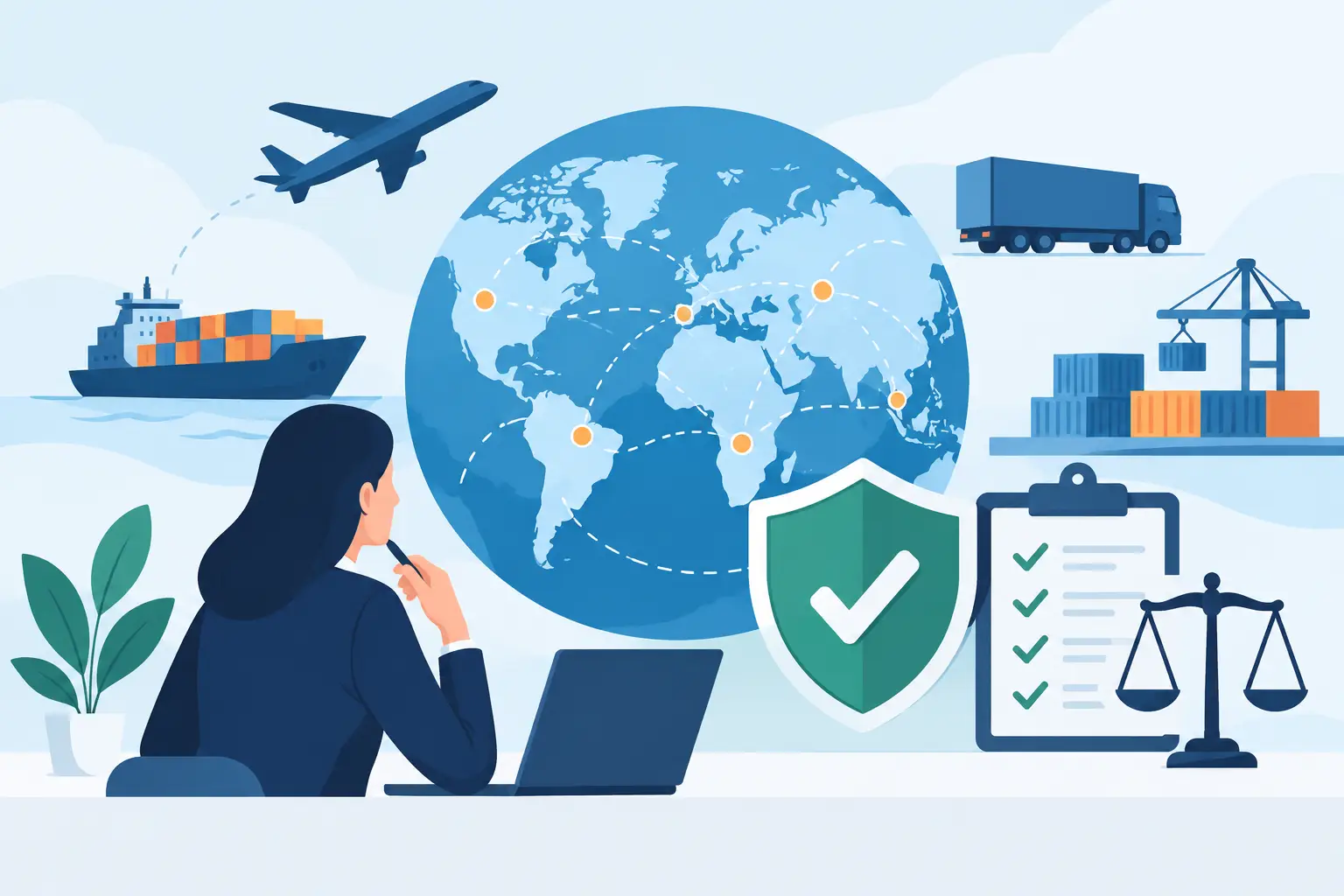
A customer signs up in Hong Kong, your sales team sits in Sydney, your developer is based in Shenzhen, and your cloud provider stores backups in Singapore. Nothing about that setup is unusual. What catches businesses out is assuming data privacy for international businesses can be handled with one policy, one consent box, and a line in the terms and conditions.
For companies operating across Australia, Hong Kong and Mainland China, privacy compliance is rarely a single-jurisdiction exercise. It is a business operations issue, a contract issue, a governance issue and, in some cases, a market entry issue. The legal rules matter, but so does how your business actually collects, stores, shares and uses personal information day to day.
Why data privacy for international businesses is more complex than it looks
Many businesses start with a reasonable assumption: if they comply where headquarters are based, they are broadly covered. In practice, that is often wrong. Privacy laws can apply based on where the individual is located, where data is processed, where services are offered, or whether information is transferred offshore.
That creates overlap. An Australian business serving customers in Hong Kong may be dealing with Australian privacy obligations, Hong Kong data protection principles, and contractual promises made to enterprise clients about security, retention and cross-border disclosure. If operations or service providers touch Mainland China, another layer of regulation may apply, particularly around personal information handling, localisation expectations, and outbound data transfer controls.
This is where businesses can become overconfident or overly cautious. Overconfidence leads to shortcuts. Over-caution can slow growth, frustrate sales teams and block sensible use of data. The better approach is to identify which rules actually apply, where the highest-risk data sits, and what controls are commercially realistic.
Start with data mapping, not legal drafting
Before drafting notices or updating website banners, work out what information your business holds and how it moves. Without that, privacy documents are often disconnected from reality.
A useful data map answers basic but critical questions. What personal information do you collect? Is it customer data, employee records, marketing lists, payment details, identity documents, or sensitive information? Where does it come from, who can access it, and where is it stored? Is it sent to related entities, software vendors, payroll providers, cloud services or offshore support teams?
For international businesses, this exercise usually reveals the real issue: not that the company lacks a privacy policy, but that data flows across too many systems without clear ownership. Founders and management teams often discover informal practices that never made it into contracts or internal procedures. A shared spreadsheet, a messaging app used for onboarding documents, or a regional team downloading customer records locally can create legal and security exposure quickly.
The main pressure points in cross-border privacy compliance
Cross-border transfers
Cross-border data transfers are often the first legal flashpoint. Different jurisdictions approach offshore disclosure differently. Some focus on notice and consent. Others impose due diligence obligations, contractual controls, or sector-specific restrictions. In some cases, the issue is not whether transfer is possible, but whether your business has taken reasonable steps before doing so.
This matters in ordinary commercial arrangements. A CRM hosted outside Australia, an HR platform with regional administrators, or customer support handled in another jurisdiction can all amount to cross-border disclosure or processing. The risk rises where businesses cannot clearly identify where vendors store data or which subcontractors they use.
Vendor and platform risk
Many privacy failures begin in procurement, not legal. Businesses sign up to software that works well commercially but offers poor visibility on storage location, subcontracting, incident response, or deletion rights. That may be manageable for low-risk data. It becomes far more serious where the platform handles employee records, financial information, identity verification documents, or customer behaviour data.
A vendor does not remove your obligations. If anything, it can complicate them. Your clients and regulators will usually look first at your business, not the software provider you selected.
Different standards for the same dataset
One dataset may be subject to several expectations at once. Marketing teams may want broad analytics use. Sales teams may want easy access across regions. Legal and compliance teams may be focused on purpose limitation, retention periods and access restrictions. All of them are looking at the same information through a different lens.
The practical answer is rarely to ban internal sharing entirely. It is to define what use is necessary, what use is optional, and what approvals or disclosures are needed before data is repurposed.
Data privacy for international businesses needs a contract layer
Privacy compliance is often treated as a policy problem. In cross-border business, it is also a contract problem. If your agreements with customers, suppliers, staff and service providers do not match your actual data practices, your legal position weakens quickly.
Customer contracts may need clear language on who processes personal information, where data may be transferred, what security commitments apply, and what happens if a data incident occurs. Supplier contracts should deal with confidentiality, processing instructions, subcontracting, breach notification, audit rights where appropriate, and deletion or return of information when services end.
Employment arrangements matter too. Cross-border businesses often move employee information between jurisdictions for payroll, management oversight, travel, compliance or regional reporting. If internal governance is vague, staff records can become one of the least controlled categories of personal information in the business.
Strong contracts do not solve every privacy issue, but they create accountability. They also reduce the gap between legal theory and operational reality.
What a practical compliance approach looks like
Most businesses do not need a perfect global privacy framework on day one. They do need one that reflects actual risk. A startup testing a new market has different needs from a mature business handling large customer volumes across several jurisdictions. The principle is the same: prioritise by exposure.
Start with the highest-impact areas. Usually that means customer onboarding, employee data, key software platforms, website collection points, and any transfer of personal information across borders. Then review whether your external privacy notice, internal practices and contractual arrangements align.
Training matters more than many businesses expect. Privacy risk is often created by ordinary behaviour – forwarding spreadsheets, granting broad system access, using personal devices, or collecting more information than needed because a form was never updated. Short, practical guidance for staff is often more effective than a dense policy few people read.
Incident response is another area where businesses should be realistic. If a privacy breach occurs, the problem is not only technical. You may need to assess legal notification obligations in more than one jurisdiction, manage client communications, preserve evidence, and coordinate across internal teams quickly. A response plan that exists only on paper is not much use.
Australia, Hong Kong and Mainland China: why local context matters
Businesses connected to Australia, Hong Kong and Mainland China should be particularly careful about assuming these markets approach privacy in the same way. They do not. The legal frameworks, regulatory priorities and business expectations differ, even where the underlying commercial activity looks similar.
Australia places significant emphasis on handling personal information in accordance with statutory privacy principles, including obligations that can extend to offshore disclosure. Hong Kong has its own data protection framework and enforcement considerations, with a distinct regulatory and commercial context. Mainland China introduces another level of complexity, especially for businesses dealing with local operations, platform ecosystems, employee data, or information transferred out of the Mainland.
That means privacy strategy should not be copied and pasted between markets. The right answer may depend on where your customers are, where your staff are located, what systems you use, and whether you are operating directly or through related entities, distributors or service partners.
For businesses in this corridor, legal advice is most useful when it is practical and jurisdiction-aware. That includes understanding not just the black-letter law, but how commercial teams actually work across language, culture and operational structures. This is where firms such as SimplifyLaw can add value by helping clients turn complex cross-border obligations into workable decisions.
When to get advice before a problem arises
If your business is entering a new market, centralising customer data, changing software providers, outsourcing support functions, or handling more employee information across borders, privacy should be reviewed early. The same applies if a major customer asks for detailed data protection commitments during procurement. These are often signs that privacy is no longer a back-office issue.
Legal advice is particularly useful where business leaders are trying to balance speed and compliance. The question is rarely whether privacy matters. The real question is what level of control is proportionate for the business you have now, while leaving room to scale.
A sensible privacy framework should support growth, not obstruct it. That usually means clear documentation, better contracts, disciplined internal access, and a realistic understanding of which jurisdictions create the greatest exposure.
The businesses that handle privacy well are not always the ones with the longest policies. They are usually the ones that know where their data is, why they hold it, and who is responsible when something changes.