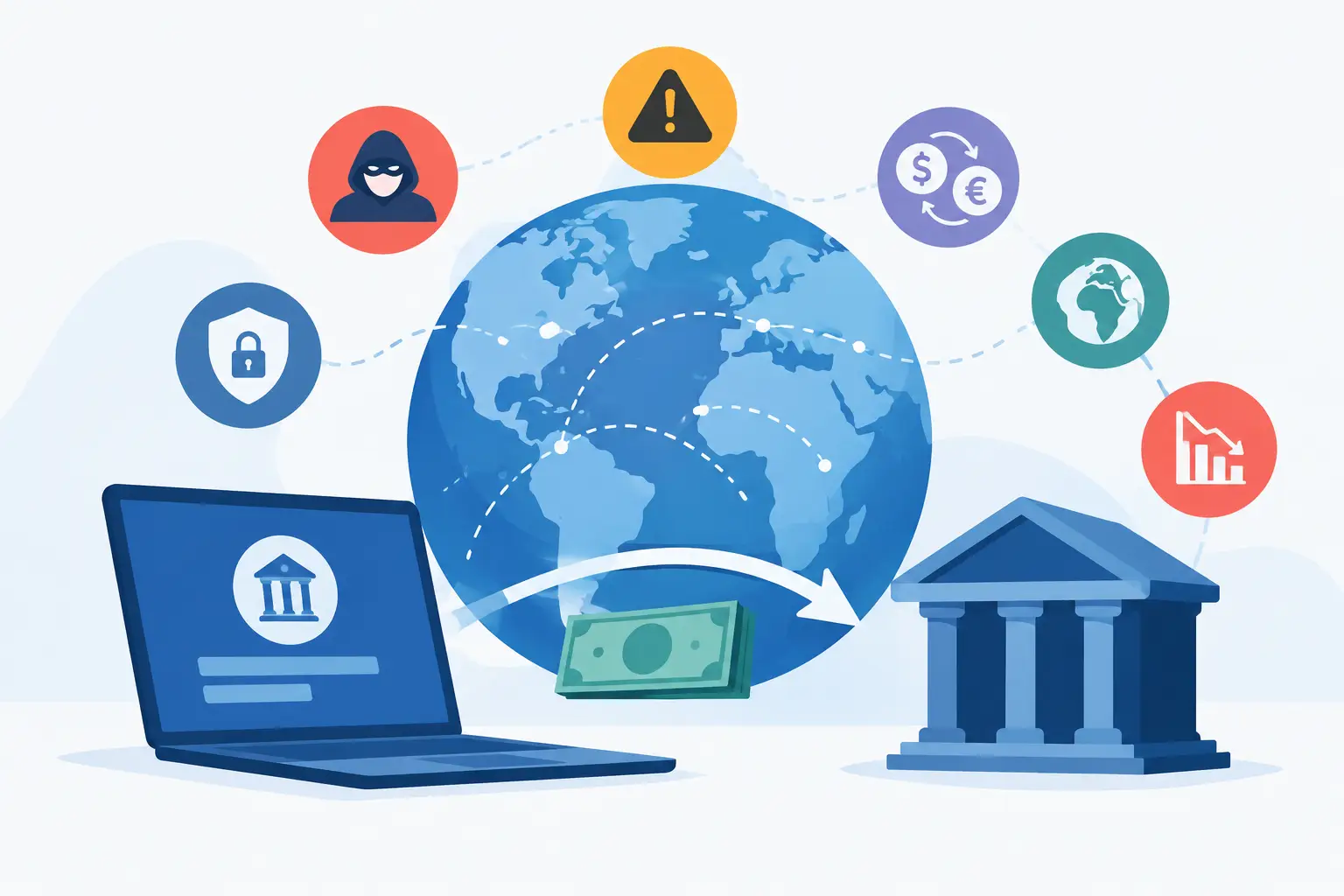
A payment instruction can look routine: an Australian company pays a Hong Kong supplier, a distributor receives funds from Mainland China, or a founder transfers capital to an overseas entity. Yet the top risks in cross-border payments often sit outside the banking screen. They arise from the contract, the identity of the parties, the currency chosen, the purpose of the payment and the laws that apply at each point in the transaction.
For businesses operating between Australia, Hong Kong and Mainland China, payment risk is not simply a finance function. It is a commercial and legal issue. A delayed, rejected or misdirected payment can affect supply, margins, regulatory exposure and business relationships at the same time.
Why cross-border payments need legal attention
Domestic payments generally operate within one banking system, one currency and a familiar regulatory setting. Cross-border payments do not. A single transfer may involve correspondent banks, foreign exchange providers, screening systems and different rules on anti-money laundering, sanctions, tax, foreign exchange controls and data handling.
The right level of preparation depends on the transaction. A recurring payment to a long-standing supplier needs different controls from a first payment connected to a new overseas investor, a sensitive product category or a disputed invoice. The practical objective is not to make every payment process slow. It is to identify the points where speed can create a disproportionate risk.
The top risks in cross-border payments
1. Sanctions and anti-money laundering exposure
Banks and payment providers are required to screen transactions against sanctions lists and to monitor activity that may suggest money laundering, terrorism financing or other financial crime. A payment may be held or rejected where a counterparty, beneficial owner, bank, vessel, location or even payment description triggers concern.
This risk is frequently misunderstood. A business may believe it is dealing with a legitimate company, but the relevant issue can be who ultimately owns or controls that company. Equally, a payment can attract attention because it is routed through a jurisdiction, bank or intermediary that creates additional compliance concerns.
A rejected payment is inconvenient. A payment linked to a sanctioned person or prohibited activity may be far more serious. Before funds move, businesses should know their counterparty, understand the commercial purpose of the payment and retain documents that support it. For higher-risk transactions, basic onboarding is rarely enough.
2. Fraud and changed bank details
Invoice fraud remains one of the most immediate risks in international trade. Criminals can compromise email accounts, imitate a supplier or intercept communications, then issue instructions to pay a new account. Once funds have crossed borders, recovery can be difficult and time-sensitive.
The risk is heightened when a business relies on email alone, particularly where the supplier relationship is new or personnel are under pressure to meet a shipment deadline. A genuine-looking invoice, familiar logo and convincing explanation for an account change do not make the instruction safe.
A clear verification process matters. Any change to bank details should be confirmed through an independently sourced contact method, not by replying to the email that requested the change. Internal approval limits, separation between invoice approval and payment release, and clear records of verification provide meaningful protection. The cost of a short phone call is minor compared with the loss caused by a fraudulent transfer.
3. Currency volatility and unclear foreign exchange terms
Foreign exchange movements can change the economics of a transaction quickly. An Australian business may agree to pay in US dollars, Hong Kong dollars or renminbi, only to find that the Australian dollar has weakened before payment falls due. If the contract does not allocate this risk, the party making payment often carries it by default.
The issue is not merely the exchange rate. Payment timing, bank spreads, transfer fees and conversion arrangements can all alter the final amount received. A supplier who expects a fixed net amount may claim a shortfall where intermediary charges are deducted. A customer may dispute an invoice if the quoted price did not make clear which currency applied.
Contracts should state the payment currency, due date, party responsible for bank charges, exchange-rate basis where relevant, and the consequence of late payment. Where exposures are material or recurring, finance teams may also consider hedging. Hedging can reduce uncertainty, but it has costs and may not suit every transaction or cash-flow position.
4. Foreign exchange controls and payment restrictions
Not every jurisdiction permits funds to move freely for every purpose. Mainland China, in particular, has foreign exchange controls that can affect the timing, evidence and structure of inbound and outbound payments. The underlying transaction documents may need to support the payment purpose, whether it concerns goods, services, loans, dividends, capital contributions or another arrangement.
Problems commonly arise when the commercial agreement, invoice and payment narrative do not align. A payment described as a service fee may be queried if the supporting documents suggest a loan or investment. A business may also assume that funds can be remitted immediately after a contract is signed, without allowing for approvals, bank requirements or documentary review.
This does not mean cross-border trade with Mainland China is impractical. It means the payment structure should be considered early, alongside the contract and tax position. A legally sound agreement that cannot be implemented through the intended payment channel does not deliver the commercial result either party expected.
5. Contract terms that do not match the payment reality
Many payment disputes begin with vague drafting. Terms such as “payment on delivery” or “payment in advance” may appear straightforward but leave essential questions unanswered. Which account must receive payment? When is payment treated as made: when the payer instructs its bank, when the funds clear, or when the recipient can use them? What happens if a bank freezes the transfer for compliance checks?
The contract should also address partial payments, disputed invoices, withholding rights, late-payment interest and the treatment of taxes or charges. These issues matter where goods are delayed, services are incomplete or a party claims that it has paid while the recipient has not received cleared funds.
For transactions involving related entities across Australia, Hong Kong and Mainland China, the terms should be commercially supportable as well as clear. Intercompany payments without proper agreements, services evidence or pricing rationale can create tax, accounting and regulatory difficulties later.
6. Tax, withholding and reporting mistakes
A payment that appears to be a straightforward fee may have tax consequences in more than one jurisdiction. Depending on the nature of the payment, withholding tax, goods and services tax, income tax, transfer pricing or reporting obligations may arise. The answer depends on the facts, the countries involved and any applicable tax treaty.
The timing matters. If a payer discovers a withholding obligation after promising to pay a supplier a fixed amount, it may face an unexpected cost or a contractual dispute over whether the payment should be grossed up. Similarly, a poorly classified payment can complicate accounting and make it harder to explain the transaction to a bank or regulator.
Legal, tax and finance advisers should not work in isolation where payment structures are significant. Each sees a different part of the risk. Bringing those views together before payment terms are finalised is generally more efficient than correcting the arrangement after funds have moved.
7. Data, records and enforceability gaps
Cross-border payments generate sensitive information: bank details, identification documents, contracts, invoices and communications. Handling that information across jurisdictions raises privacy and cybersecurity considerations, particularly when documents are shared among group companies, agents, banks and external advisers.
Good records also serve a commercial purpose. If a payment is challenged, delayed or disputed, the business may need to show the agreement, invoice, delivery evidence, approvals, correspondence and proof of transfer. Without a clear document trail, recovering money or enforcing contractual rights becomes substantially harder.
Dispute planning should be proportionate, but it should exist. Parties should consider governing law, dispute resolution mechanisms and where a judgment or award could realistically be enforced. A favourable outcome on paper has limited value if the counterparty’s assets are elsewhere and enforcement has not been considered.
Building a payment process that supports growth
A sensible cross-border payment process begins before the invoice arrives. It connects counterparty checks, contractual terms, approvals, foreign exchange planning and document retention. For lower-value, repeat transactions with trusted counterparties, the process can be streamlined. For a new market entry, acquisition, investment, high-value supply agreement or payment involving Mainland China, more careful legal review is usually warranted.
Businesses also benefit from assigning ownership. Finance may execute payments, but legal should review the framework for material arrangements and operational teams should understand the fraud controls. Where a business does not have in-house legal capability, fractional general counsel support can help establish practical procedures without adding unnecessary layers to daily operations.
The aim is simple: make it easier to pay the right party, for the right purpose, on terms that protect the commercial relationship. When payment arrangements are designed with that discipline, cross-border growth becomes more predictable and far less dependent on last-minute fixes.